


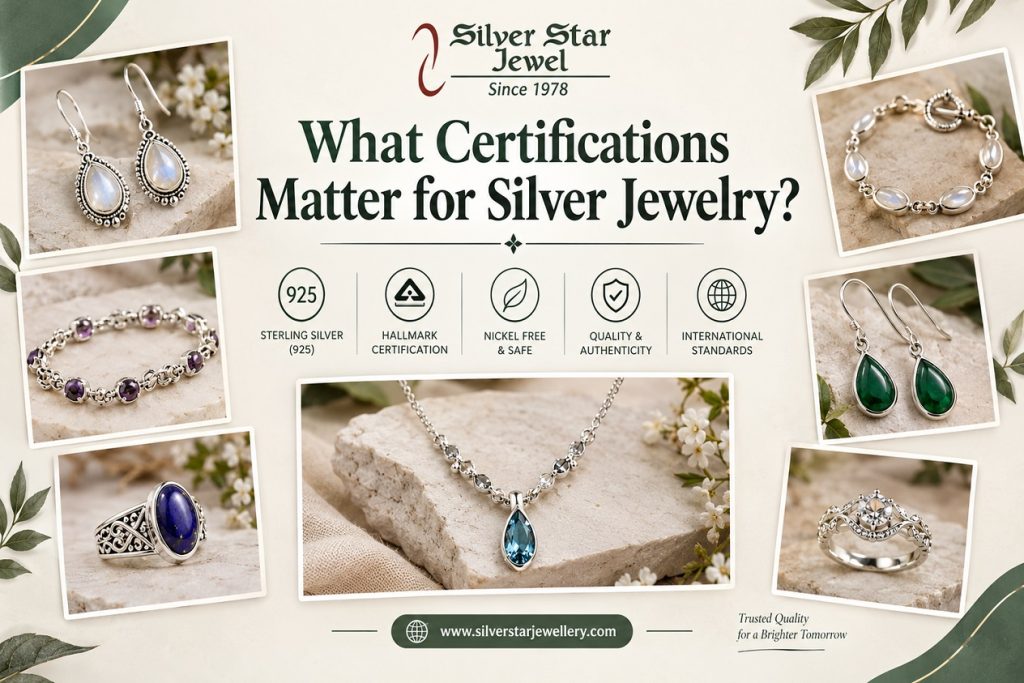
Silver jewelry holds lasting value when its quality and composition can be verified. Buyers, retailers, and regulators look for clear proof that the metal meets purity standards and that any gemstones are accurately described. Certifications provide that proof through independent testing and documented processes. Academic reviews of the jewelry trade show that reliable standards reduce disputes, support fair pricing, and protect both producers and end users. Understanding the main certifications helps everyone involved make informed decisions based on evidence rather than claims alone.
Wholesale Sterling Silver Gemstone Jewelry Exporter Standards for Purity and Quality
Wholesale Sterling Silver Gemstone Jewelry Exporter operations depend on consistent metal purity and accurate gemstone disclosure. The most widely recognized standard for silver is the 925 mark, which confirms that the alloy contains 92.5 percent pure silver and 7.5 percent other metals for strength. In many countries, this mark is backed by official hallmarking systems that require independent laboratory testing. Research on precious metal regulation notes that hallmarking creates a shared reference point across borders and reduces the risk of under-karat or mislabeled goods entering the market.
Gemstone components add another layer. Certificates from recognized laboratories describe species, treatment history, and sometimes origin. These documents help confirm that stones have not been subjected to undisclosed enhancements that affect durability or value. Studies of gemological practice emphasize that independent testing protects the integrity of the supply chain by separating verified material from unverified material. When both metal and stones carry clear documentation, wholesale transactions become more transparent, and disputes decline.
Role of Wholesale Silver Necklaces in Meeting Hallmark Requirements
Wholesale Silver Necklaces often form a large share of production volume, so consistent hallmark compliance is especially important. Hallmarking involves physical testing of samples from each batch and the application of official stamps. In jurisdictions with mandatory systems, every piece above a certain weight must carry the approved marks. Academic analyses of consumer protection law show that these requirements exist to give buyers confidence that the stated purity matches the actual composition.
Beyond basic purity, some markets also examine solder quality, finishing, and structural integrity. Necklaces experience repeated stress at clasps and links, so production standards that address these points help ensure the finished goods perform as expected. Research on product durability links clear manufacturing guidelines to lower rates of returns and complaints. When wholesale lots meet the same tested criteria, retailers can present the items with greater certainty.
Importance of Wholesale Sterling Silver Earrings for Safety and Composition Claims
Wholesale Sterling Silver Earrings raise additional considerations around skin contact and alloy composition. Many buyers prefer nickel-free formulations because nickel sensitivity is relatively common. Certifications or test reports that confirm the absence of restricted substances support these preferences. Regulatory frameworks in several regions limit the release of nickel and other allergens from jewelry intended for prolonged skin contact. Studies in dermatology and materials science confirm that verified low-release alloys reduce the incidence of contact dermatitis.
Earring posts, backs, and decorative elements must also meet the same purity standards as other silver items. Consistent testing across components prevents mixed-alloy pieces from reaching the market. Quality management systems that document batch testing and material sourcing further strengthen the reliability of these products. Academic work on supply-chain transparency highlights that documented processes make it easier to trace issues if they arise and to maintain buyer trust over time.
Hallmarking Systems and National Standards
Different countries operate their own hallmarking authorities. These bodies set testing protocols, approve laboratories, and define the exact marks that may appear on finished jewelry. Comparative studies of hallmarking regimes show that mutual recognition agreements between countries help goods move more smoothly in international trade while still protecting local consumers. Producers who understand the requirements of their target markets can plan testing and marking steps accordingly.
The process usually includes sampling, assaying, and stamping under controlled conditions. Records of these steps form an audit trail that can be reviewed later. Research on regulatory compliance indicates that firms maintaining complete records experience fewer interruptions during inspections and customs clearance. Clear documentation also supports accurate inventory valuation and insurance coverage.
Gemstone Documentation and Disclosure Practices
When silver jewelry incorporates colored stones, pearls, or other gem materials, separate documentation becomes relevant. Laboratory reports typically state whether a stone has been treated, the type of treatment, and any significant inclusions or clarity features. Industry guidelines developed by trade associations and gemological institutes stress that full disclosure allows buyers to assess value and care requirements correctly.
Academic examinations of the gem trade note that incomplete or missing treatment information has historically led to disputes and loss of confidence. Standardized reporting formats reduce ambiguity. Producers who request and retain these reports for the stones they use create a stronger foundation for long-term business relationships based on verified facts rather than verbal assurances.
Ethical Sourcing and Supply-Chain Verification
Beyond metal purity and gemstone identity, attention has grown around the conditions under which raw materials are obtained. Verification schemes that track silver and gemstones from mine or source to finished product help address concerns about environmental impact and labor practices. Studies in responsible sourcing show that documented chains of custody support risk management and respond to increasing expectations from institutional buyers and regulators.
These systems often combine supplier questionnaires, third-party audits, and material testing. While no single certificate covers every aspect of ethical performance, the combination of metal assays, gem reports, and sourcing records provides a practical framework. Research on corporate responsibility indicates that firms maintaining such records are better positioned to answer detailed inquiries and to adapt as expectations evolve.
Quality Management and Process Certifications
Some producers adopt broader quality management systems that cover design, production, inspection, and record-keeping. These systems emphasize consistent processes rather than one-time product tests. Academic reviews of manufacturing standards observe that documented procedures reduce variation between batches and make it easier to identify the source of any defect.
Inspection protocols, calibrated equipment, and trained personnel form the practical core of these systems. When combined with hallmarking and gemstone reports, they create multiple layers of verification. The result is a body of evidence that supports confident statements about composition, construction, and compliance.
Conclusion
Certifications for silver jewelry serve as independent references for purity, gemstone characteristics, safety, and process reliability. Hallmarking confirms metal content, laboratory reports clarify stone attributes, and additional documentation addresses composition claims and sourcing practices. Together, these tools reduce uncertainty for everyone in the chain from producer to final wearer. Clear standards and transparent records support fair exchange and sustained confidence in the material itself. Continued attention to accurate testing and full disclosure remains the most effective way to maintain the integrity of silver jewelry across markets.
Frequently Asked Questions (FAQs)
Que. Why is the 925 mark important for silver jewelry?
Ans. The 925 mark indicates that the alloy contains 92.5 percent pure silver. Independent hallmarking systems verify this composition through laboratory testing, giving buyers a reliable reference for metal content.
Que. Do gemstones in silver jewelry require separate certificates?
Ans. When gemstones are present, laboratory reports describing species, treatments, and other characteristics provide useful verification. These reports help confirm that the stones match their described attributes.
Que. How do certifications help with international trade of silver jewelry?
Ans. Recognized marks and test reports simplify customs clearance and reduce questions about composition. Mutual recognition between national systems further supports smoother movement of goods across borders.
Que. What role does nickel testing play for earrings and other skin-contact items?
Ans. Nickel release testing addresses common sensitivity concerns. Results that meet regulatory limits support safer use for more wearers.
Que. Are process certifications as important as product hallmarks?
Ans. Process systems document how consistency is maintained across production. When combined with product testing, they provide a fuller picture of reliability and traceability.