


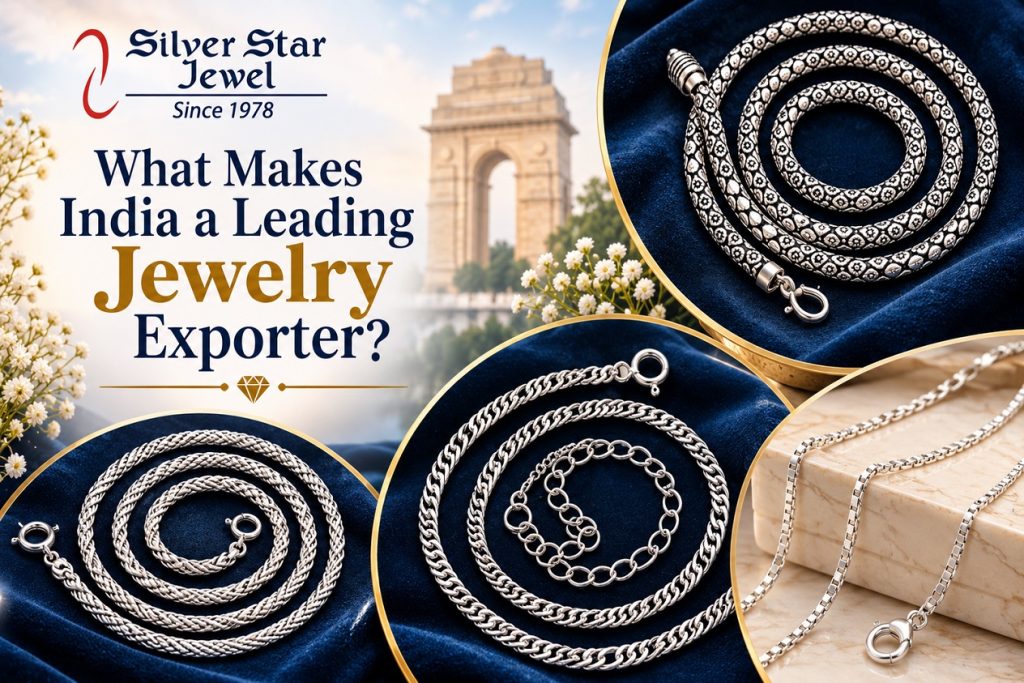
India holds a long-standing position in the global jewelry trade. Its combination of skilled craftsmanship, abundant design traditions, and organised manufacturing capacity allows the country to supply a wide range of products to international markets. Sterling silver items form an important part of this export activity. The sector draws on regional specialisations, quality control systems, and established trade networks that together support consistent overseas demand.
Wholesale 925 Sterling Silver Jewelry Supplier Networks and Export Strength
Wholesale 925 Sterling Silver Jewelry Supplier operations form a core part of India’s silver jewelry export structure. These networks connect artisan clusters with overseas buyers who require reliable volumes of 925-grade silver pieces. Academic studies on industrial clusters note that such organised supply chains reduce transaction costs and improve consistency in alloy purity and finishing. Producers in major hubs maintain documented processes for hallmarking and quality checks that meet international buyer expectations. This systematic approach helps Indian exporters maintain repeat orders across fashion, bridal, and everyday wear categories.
The presence of specialised suppliers also supports design variety. Makers can respond to shifting preferences in different regions while keeping production schedules stable. Research on manufacturing competitiveness highlights that flexible yet coordinated production systems give Indian firms an advantage in time-sensitive export cycles.
Role of Wholesale Sterling Silver Pendants in Design Diversity
Wholesale Sterling Silver Pendants represent one of the most visible categories within India’s silver jewelry exports. These items showcase the country’s ability to combine traditional motifs with contemporary forms. Artisans draw on techniques such as filigree, engraving, and stone setting that have developed over generations in centres known for silver work. Development literature on craft-based industries observes that pendant production allows both small workshops and larger units to participate in export orders because the items are relatively standardised yet open to design variation.
Consistent demand for pendants encourages investment in tools and training. This investment, in turn, raises overall skill levels within the local workforce. Educational research on vocational skills points out that export-linked production often creates clearer pathways for apprentices to learn and refine techniques under commercial conditions.
Sterling Bracelets Wholesale and Volume Capabilities
Sterling Bracelets Wholesale channels demonstrate India’s capacity to handle larger order quantities without sacrificing finish quality. Bracelets require precise sizing, secure clasps, and uniform surface treatment. Export-oriented units have developed processes that allow batch production while retaining hand-finished details that buyers value. Economic analyses of light manufacturing show that this mix of scale and craftsmanship supports competitive pricing in global markets.
Wholesale bracelet supply also benefits from material efficiency. Silver recovery systems and standardised component sourcing help control costs. Studies of resource use in metal crafts indicate that organised recovery practices improve both economic and environmental performance over time.
Historical Foundations of Jewelry Craftsmanship
Jewelry making in India rests on centuries of technical knowledge. Regional traditions developed distinct styles in silver work, from detailed surface decoration to structural forms suited to different climates and cultural practices. Historians of material culture note that these traditions adapted to changing trade routes and material availability while preserving core techniques. The continuity of skill transmission within families and workshops provides a deep pool of experienced makers that modern export units continue to draw upon.
Government and institutional support for training programmes has helped document and standardise many of these techniques for larger-scale production. This documentation supports quality certification processes required by overseas buyers.
Quality Standards and Certification Systems
Export success depends on consistent adherence to alloy standards and finishing norms. The 925 designation requires precise silver content, and Indian manufacturing units increasingly operate under documented quality management systems. Academic reviews of export competitiveness emphasise that third-party testing and hallmarking facilities strengthen buyer confidence. These systems also encourage continuous improvement in production methods.
Traceability practices have grown in importance. Buyers seek information about material sources and labour conditions. Units that maintain clear records find it easier to meet such requirements and retain long-term clients.
Design Adaptation and Market Responsiveness
Indian exporters monitor shifts in international fashion and jewellery preferences. Design teams work with both traditional motifs and minimalist contemporary forms. Collaboration between designers and production units allows rapid sampling and adjustment. Research on creative industries notes that this responsiveness helps manufacturers remain relevant across different consumer segments and geographic markets.
Seasonal collections and customised private-label work further expand opportunities. The ability to fulfil both standard catalogue items and specialised requests contributes to the sector’s overall resilience.
Infrastructure and Trade Facilitation
Special economic zones, export processing facilities, and improved logistics corridors support timely delivery. Access to refining capacity and component suppliers within the same regions reduces lead times. Studies of industrial geography show that clustering of related activities lowers costs and raises collective efficiency. Trade facilitation measures, including simplified documentation and digital tracking, have further eased the movement of goods across borders.
Participation in international trade fairs and digital platforms extends market reach. These channels allow smaller specialised units to connect with buyers who value distinctive design and reliable fulfilment.
Sustainability Practices in Silver Jewelry Production
Environmental considerations increasingly influence export competitiveness. Many units adopt water recycling, controlled chemical use, and silver recovery systems. Academic work on sustainable manufacturing highlights that such practices reduce long-term operational risks and align with buyer expectations in major markets. Training programmes help workers apply safer methods without reducing productivity.
Social aspects receive parallel attention. Organised production environments often provide more stable working conditions and clearer payment systems than purely informal arrangements. Gender-focused studies of craft employment note that structured export units can expand opportunities for women artisans when recruitment and training are managed inclusively.
Challenges Facing the Sector
Fluctuations in silver prices, rising energy costs, and changing trade regulations create ongoing pressure. Smaller units may struggle with certification expenses or design development capacity. Research on small enterprise resilience suggests that cooperative arrangements and shared service centres can help address these constraints. Continuous skill upgrading remains necessary as buyer requirements evolve.
Competition from other producing countries requires sustained attention to quality differentiation and reliable delivery. Units that invest in both technical capability and market knowledge maintain stronger positions over time.
Conclusion
India’s position as a leading jewelry exporter rests on a combination of deep craft traditions, organised manufacturing systems, and adaptive design capacity. Sterling silver products benefit from established supplier networks, quality processes, and the ability to balance volume with distinctive finishing. Continued focus on certification, sustainability, and skill development strengthens this foundation. The sector’s capacity to meet diverse international requirements while retaining technical excellence supports its ongoing role in global jewelry trade.
Frequently Asked Questions (FAQs)
Que. Why does India maintain a strong position in sterling silver jewelry exports?
Ans. India combines long-established craftsmanship with organised production systems that meet international quality and volume requirements. Documented processes for alloy standards and finishing help maintain buyer confidence across markets.
Que. How do quality certifications support export activity?
Ans. Certifications and hallmarking provide independent verification of silver content and manufacturing standards. These systems reduce uncertainty for overseas buyers and support repeat business.
Que. What role do design capabilities play in export success?
Ans. Design teams adapt traditional techniques to current preferences while offering both standard and customised options. This flexibility allows manufacturers to serve varied market segments effectively.
Que. How do manufacturing clusters contribute to competitiveness?
Ans. Clusters bring together specialised skills, material suppliers, and finishing services in proximity. This concentration lowers costs and shortens production cycles for export orders.
Que. What sustainability measures are relevant to silver jewelry production?
Ans. Recovery of silver from process waste, controlled use of chemicals, and water recycling systems reduce environmental impact. These practices also support long-term operational stability and alignment with buyer expectations.