


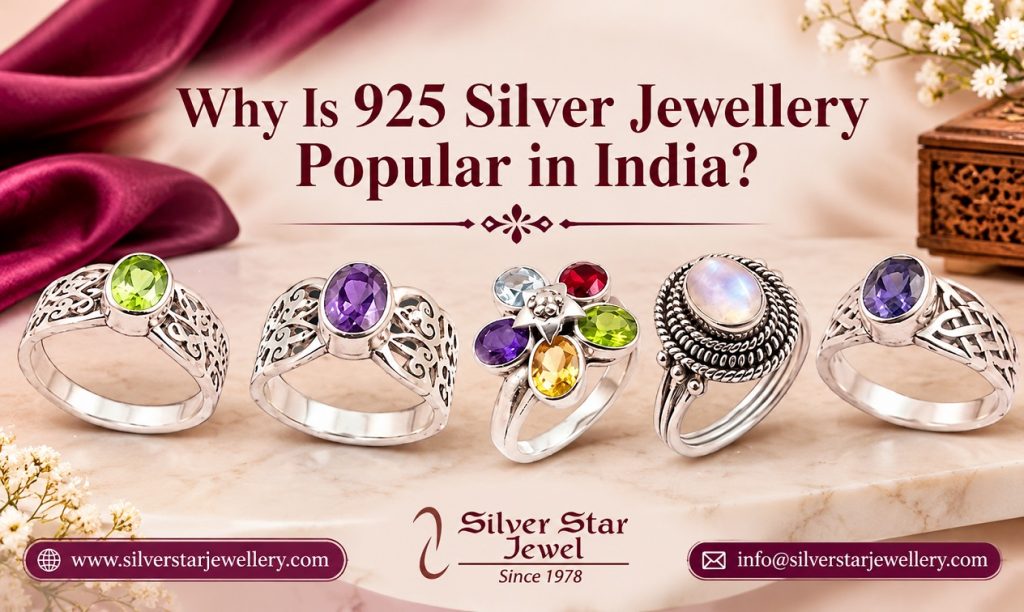
925 silver, also known as sterling silver, contains 92.5 percent pure silver mixed with other metals for strength. This standard has become widely accepted in India for its balance of purity, durability, and reasonable cost. Across urban and rural markets, people choose silver jewellery for daily wear, festivals, and special occasions. Academic research on material culture in South Asia highlights how silver holds both practical and symbolic value in Indian society. Its popularity rests on craftsmanship traditions, economic accessibility, and cultural associations that continue to shape consumer preferences.
Jaipur Silver Jewellery and Traditional Craftsmanship
Jaipur Silver Jewellery represents one of the strongest regional traditions linked to sterling silver in India. Artisans in this city have refined techniques of casting, engraving, and stone setting over generations. Historical accounts of Rajasthan’s craft economy show that silver work developed alongside royal patronage and later adapted to broader commercial demand. The city’s workshops produce pieces that combine traditional motifs with contemporary forms. Scholars studying Indian metal crafts note that such regional specialisation helps maintain high standards of finish and design consistency. Buyers often associate jewellery from this centre with reliable quality and distinctive aesthetic character. This reputation supports both local sales and wider distribution networks.
Role of Wholesale Sterling Silver Stud Earrings in Daily Use
Wholesale Sterling Silver Stud Earrings meet a steady demand for simple, versatile accessories. Studs remain popular because they suit office settings, casual outings, and formal events without requiring frequent adjustment. Research on consumer behaviour in Indian fashion markets indicates that lightweight silver studs appeal to a broad age group. Bulk availability through wholesale channels allows retailers and smaller designers to offer variety at accessible price points. The metal’s resistance to tarnish when properly cared for adds to its practical value. Academic observations on everyday adornment practices confirm that small silver earrings form part of many women’s regular wardrobes across different regions.
Wholesale Sterling Silver Pendants and Design Flexibility
Wholesale Sterling Silver Pendants provide another important category within the sterling silver market. Pendants can carry religious symbols, floral patterns, geometric shapes, or minimalist forms. This range allows wearers to express personal or cultural identity through a single piece. Studies on jewellery as material culture in India point out that pendants often serve both decorative and commemorative purposes. Wholesale supply enables consistent production of popular designs while leaving room for limited custom orders. The combination of pure silver content and alloy strength ensures that pendants hold their shape during regular use. Such characteristics contribute to the sustained interest in this form of adornment.
Sterling Silver Necklace Wholesale and Broader Market Access
Sterling Silver Necklace Wholesale channels help move larger volumes of finished pieces from production centres to retail outlets and exporters. Necklaces in 925 silver appear in various lengths and styles, from delicate chains to more substantial statement designs. Economic analyses of the Indian handicraft and jewellery sector note that wholesale operations reduce per-unit costs and improve inventory flow for sellers. This structure supports smaller manufacturers who may lack direct retail presence. The result is wider availability of sterling silver necklaces in both domestic and international markets. Academic reviews of value chains in precious metal crafts emphasise that organised wholesale systems can stabilise income for skilled workers when managed transparently.
Cultural and Economic Factors Behind Preference for 925 Silver
Silver has long held a place in Indian household traditions. Families often gift silver items during weddings, childbirth, or religious ceremonies. Unlike higher-priced metals, 925 silver remains within reach for a larger section of the population. Development studies on consumption patterns show that this affordability encourages regular purchase rather than occasional luxury buying. At the same time, the metal’s association with purity and positive energy in certain cultural contexts adds symbolic weight. Researchers examining ritual objects observe that silver continues to feature in both everyday and ceremonial practices.
The alloy composition of 925 silver offers practical advantages. Pure silver is soft and can deform easily. The addition of other metals increases hardness without significantly reducing the silver content that consumers value. Laboratory tests and industry standards confirm that this mixture maintains a bright appearance when cleaned regularly. These technical qualities support the metal’s use in intricate designs that require fine detail.
Influence of Craft Clusters and Skill Transmission
Major production hubs maintain networks of specialised workers. Some focus on casting, others on polishing or stone setting. This division of labour raises overall output while preserving individual skill sets. Ethnographic studies of craft communities in India document how apprentices learn through direct participation in workshop activity. Steady orders for standardised pieces help keep these training pathways active. When demand remains consistent, younger workers find clearer reasons to continue family or community traditions rather than seeking unrelated employment.
Export orientation also plays a role. International buyers often seek certified 925 silver jewellery that meets global purity standards. Compliance with these norms strengthens the position of Indian producers in overseas markets. Reports on trade in handicrafts indicate that certification and consistent quality control improve long-term buyer confidence.
Practical Care and Longevity Considerations
Owners of 925 silver jewellery benefit from simple maintenance routines. Regular cleaning with mild solutions and proper storage reduce tarnish caused by exposure to air and moisture. Material science literature explains that the alloy responds well to basic care practices common in Indian households. This ease of upkeep contributes to the perception of silver as a durable choice for frequent wear. In contrast to more delicate materials, sterling silver can withstand daily handling when treated reasonably.
Conclusion
The popularity of 925 silver jewellery in India rests on a combination of material properties, regional craftsmanship, cultural familiarity, and economic accessibility. Traditions centred in places such as Jaipur continue to supply distinctive designs, while wholesale systems for studs, pendants, and necklaces expand availability. Academic observations of material culture and craft economies underscore how these factors interact to sustain demand. As long as quality standards and transparent production practices remain in focus, sterling silver is likely to retain its place in both personal adornment and broader market circuits across the country.
Frequently Asked Questions (FAQs)
Que. What does the 925 marking mean on silver jewellery?
Ans. The 925 marking indicates that the piece contains 92.5 percent pure silver mixed with other metals for added strength. This is the international standard for sterling silver.
Que. Why do many people prefer silver over gold for everyday jewellery?
Ans. Silver generally costs less than gold while still offering a bright appearance and traditional associations. This makes it suitable for regular wear without the higher financial commitment required for gold pieces.
Que. How should 925 silver jewellery be cleaned at home?
Ans. Mild soap, warm water, and a soft cloth usually suffice for routine cleaning. Avoid harsh chemicals and store pieces in a dry place to limit tarnish.
Que. Are designs from traditional craft centres still relevant today?
Ans. Yes. Many workshops adapt classic motifs to contemporary shapes and sizes. This keeps older techniques visible while meeting current style preferences.
Que. Does wholesale distribution affect the quality of sterling silver pieces?
Ans. Quality depends on the standards followed by producers and suppliers. Organised wholesale channels that enforce purity checks and finish requirements help maintain consistency across larger volumes.