


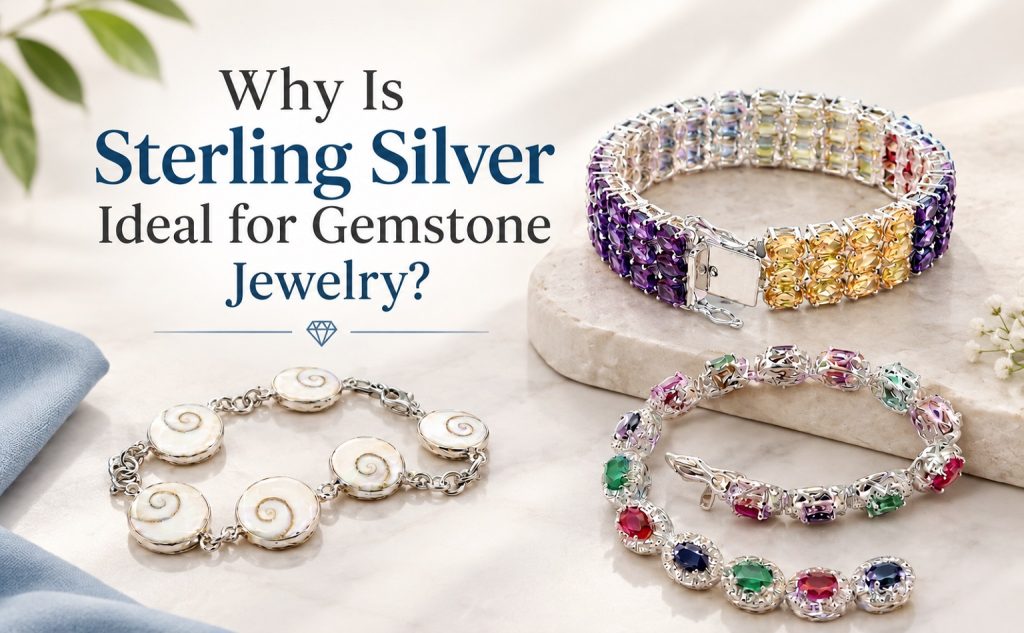
Sterling silver has long held a practical place in jewelry design because of its balance of strength, appearance, and workability. When paired with gemstones, these qualities become especially useful. The alloy supports secure settings, allows detailed craftsmanship, and presents stones in a way that feels natural rather than overpowering. Understanding the material properties helps explain why so many designers and buyers continue to choose it for gemstone pieces.
Material Composition and Structural Strength
Sterling silver contains 92.5 percent pure silver mixed with other metals, usually copper. Pure silver is too soft for most jewelry applications; it bends and scratches easily. The added metals increase hardness so that prongs, bezels, and channels can hold gemstones firmly over time. Materials science research shows that this alloy offers enough ductility for intricate shaping while remaining resistant to everyday wear. Gemstones stay secure because the metal does not deform under normal stress. This combination of hardness and flexibility makes the alloy suitable for rings, pendants, and earrings that must withstand regular use.
Optical Qualities That Enhance Gemstones
The bright white surface of sterling silver reflects light efficiently. This reflection can increase the perceived brilliance of many stones, especially those with high refractive indices such as topaz, amethyst, or peridot. Unlike warmer metals that may shift the color of cooler-toned gems, sterling silver provides a neutral backdrop. Academic studies on color perception in jewelry note that cooler metal tones often allow the true hue of a stone to remain dominant. Designers take advantage of this neutrality when creating pieces meant to showcase the gem rather than compete with it.
Workability During Manufacturing Processes
Jewelers value the ease with which sterling silver can be melted, cast, soldered, and polished. These processes allow precise placement of gemstones and clean finishing of edges around settings. Complex designs that require multiple stones or layered elements become more achievable because the metal responds predictably to tools and heat. Production efficiency improves when an alloy behaves consistently across batches. This reliability supports both small-scale artisan work and larger manufacturing runs without sacrificing detail.
Wholesale 925 Silver Jewelry Supplier
A Wholesale 925 Silver Jewelry Supplier typically manages the sourcing of certified alloy, coordinates casting and stone-setting operations, and organizes finished or semi-finished inventory for bulk distribution. Services often include quality verification of metal purity, assortment planning across different stone types, and packaging prepared for retail or further assembly. Many such partners also maintain design archives that can be adapted for seasonal collections while keeping core production standards intact. Documentation of alloy composition and basic gemstone grading usually travels with each order, giving buyers a clear record for their own quality checks. These operational elements help streamline the path from raw material to ready-to-sell pieces.
Hypoallergenic Characteristics for Broad Wearability
Most people tolerate sterling silver well because the alloy contains relatively low amounts of metals known to trigger skin reactions. Nickel is rarely used in modern formulations intended for jewelry, which further reduces sensitivity risks. Clinical observations in dermatology support the view that properly manufactured sterling silver is suitable for extended contact with skin. This quality expands the potential audience for gemstone jewelry, including individuals who prefer to avoid higher-carat gold or certain base-metal alloys. Comfort during daily wear remains an important factor when evaluating material choices.
Cost Efficiency Relative to Precious Metal Alternatives
Sterling silver occupies a middle ground between base metals and higher-priced precious metals such as gold or platinum. The lower material cost allows designers to allocate more of a piece’s budget toward better-quality gemstones or more elaborate settings. Retail pricing can stay accessible while still delivering genuine precious metal and natural or lab-created stones. Economic analyses of jewelry markets consistently show that consumers respond positively to pieces that balance perceived value with realistic price points. This accessibility supports wider distribution without requiring compromises in metal quality.
Resistance to Everyday Environmental Factors
With proper care, sterling silver resists many forms of everyday damage. It does not corrode in the same way some base metals do when exposed to moisture or mild chemicals. Tarnish can form over time through reaction with sulfur compounds in the air, yet it is surface-level and removable with standard polishing methods. Compared with pure silver, the alloy slows the rate of surface change. Gemstone settings remain intact because the underlying metal structure stays stable. Practical maintenance routines keep pieces looking consistent across years of use.
Compatibility with a Wide Range of Gemstone Types
The hardness and color of sterling silver work well with both harder and softer stones. Diamonds, sapphires, and rubies sit securely in well-designed settings, while more delicate materials such as opal or turquoise benefit from protective bezels that the alloy can form cleanly. Design flexibility increases because the same metal can support different security methods depending on the stone’s properties. This versatility reduces the need for multiple metal types within a single collection and simplifies inventory planning for manufacturers and retailers alike.
Wholesale Silver Bracelets often feature gemstone accents precisely because the alloy holds links, clasps, and settings with reliable consistency. The same material advantages appear in more complex combinations. Silver Earrings Pendant Set Manufacturer operations rely on matching metal behavior across related pieces so that finishes and stone placements remain uniform. These product categories demonstrate how the practical strengths of the alloy translate into finished assortments that maintain quality across different forms.
Long-Term Durability Under Normal Conditions
When manufactured to standard thickness and properly finished, sterling silver jewelry withstands years of regular wear. Prongs and bezels retain their shape, and polished surfaces can be refreshed without specialized equipment. Longitudinal studies of jewelry longevity indicate that alloy composition and initial craftsmanship influence lifespan more than occasional environmental exposure. Buyers who prioritize these factors when selecting pieces tend to experience fewer repairs and replacements. The material’s proven track record supports confidence in its continued use for gemstone jewelry.
Conclusion
Sterling silver remains a practical and effective choice for gemstone jewelry because of its balanced hardness, neutral optical qualities, manufacturing versatility, and relative affordability. These characteristics allow secure settings, flattering presentation of stones, and comfortable daily wear. A Wholesale 925 Silver Jewelry Supplier that maintains consistent alloy standards and clear documentation can support reliable production of such pieces. When evaluation focuses on material properties and verified processes rather than surface claims, the advantages of the alloy become clear and enduring.
Frequently Asked Questions (FAQs)
Que. Why is pure silver not commonly used for gemstone settings?
Ans. Pure silver is too soft and deforms easily under pressure. The 7.5 percent alloy metals in sterling silver provide the hardness needed to keep stones secure over time.
Que. Does sterling silver change the color appearance of gemstones?
Ans. Its neutral white tone generally allows the natural color of most stones to remain dominant. Warmer metals can sometimes shift cooler gem hues, which is less common with this alloy.
Que. How does the alloy perform with both hard and soft gemstones?
Ans. Harder stones such as sapphire sit well in prong or channel settings, while softer stones benefit from protective bezels that the metal can form accurately. The same base material supports both approaches.
Que. What maintenance helps preserve sterling silver gemstone pieces?
Ans. Regular gentle polishing removes surface tarnish, and storing pieces away from high humidity or strong chemicals slows further reaction. Settings should be checked periodically for any loosening.
Que. Is sterling silver suitable for people with sensitive skin?
Ans. Most modern formulations avoid nickel and are well tolerated. Individuals with known metal sensitivities can still request confirmation of the exact alloy composition before purchase.