


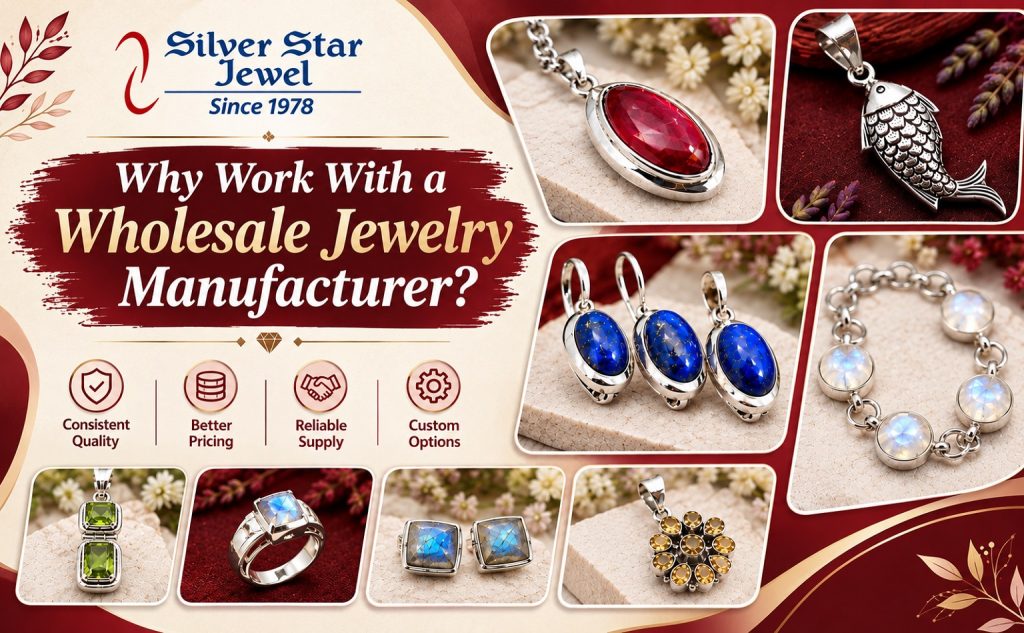
Most retailers don’t set out to become experts in sourcing. They start small, buy from whoever’s local or easy to reach, and figure out the rest as orders come in. But once a business starts moving real volume, the gaps in that approach show up fast – inconsistent quality, prices that shift for no clear reason, stock that just isn’t there when a bestseller needs restocking. That’s usually the point where store owners start looking at manufacturers directly instead of going through another layer of suppliers. This piece walks through why that shift happens, what it actually changes day to day, and where buyers tend to get tripped up.
Understanding Wholesale Jewelry Manufacturing
At its core, wholesale jewelry manufacturing means buying straight from the people who make the pieces, not from someone who bought from them first. Retail buying is one piece at a time, marked up along the way. Manufacturing is closer to the source – fewer hands in between, more say over materials and finish, and usually room to negotiate on things a distributor would never budge on. It’s not glamorous. It’s mostly paperwork, sample rounds, and a fair amount of back-and-forth before an order ships. But for a business that depends on repeat inventory, that trade-off is usually worth it.
Benefits of Partnering with a Manufacturer
A few things tend to improve once a retailer moves to direct sourcing. Pricing gets more honest, since there’s no hidden markup from a middle supplier padding the number. Large orders come out more consistent because manufacturers have the machinery and trained hands to repeat a design accurately across hundreds of units, something a small workshop can’t always promise. And when something needs to change mid-order – a stone swap, a size adjustment – there’s one point of contact instead of three. None of this happens automatically just by switching suppliers. It happens when the manufacturer actually runs a tight operation, which not all of them do.
Wholesale Silver Gemstone Jewelry Exporter and Its Services
The term Wholesale Silver Gemstone Jewelry Exporter covers more ground than people usually assume. It’s not just someone who makes jewelry and ships it – it’s a business that also handles export paperwork, customs compliance, hallmarking where it’s required, and quality checks before anything leaves the warehouse. For a retailer buying from overseas, that combination matters. Instead of juggling a manufacturer and a separate logistics agent, one party handles both, which cuts down on the back-and-forth and the number of places a mistake can happen. Worth asking, though – not every business using that label offers the full package, so it’s fair to ask exactly what’s included before signing off on an order.
Quality Standards in Bulk Silver Production
Checking quality on one handmade piece is simple; you just look at it. A thousand-piece order needs an actual system – sampling a percentage of the batch, weighing pieces to catch inconsistencies, checking stone settings, inspecting the finish before packing. A Wholesale Silver Gemstone Jewelry Exporter running this kind of process catches problems before a shipment leaves, not after a buyer opens a box three weeks later and finds half the batch off-spec. If a manufacturer can’t explain how they check quality at scale, that’s usually a sign they don’t have much of a process at all. Ask for sample reports before placing a big order. It saves headaches later.
Wholesale Silver Pendants for Modern Retailers
Pendants hold up well across almost every price bracket a store sells in, from small everyday pieces to gemstone-heavy statement designs that sit near the top of a catalog. Retailers buying Wholesale Silver Pendants usually want a mix in one order – some classic shapes, some newer designs – and that’s easier to get from a manufacturer who can adjust a production run for the season than from a distributor stuck selling whatever’s already sitting in a warehouse.
Growing Demand for Bulk Silver Bracelets
Bracelets have picked up noticeably over the last couple of years, partly thanks to the layering trend and partly because silver reads as more approachable than gold for a lot of shoppers. With Bulk Silver Bracelets, weight and clasp durability end up mattering just as much as the design – these are pieces people wear daily, and a clasp that fails after two weeks becomes a return, then a complaint, then a review. Manufacturers who focus on bracelets specifically tend to build their process around exactly that kind of wear, in a way a general supplier making everything under one roof often doesn’t.
Cost Efficiency and Long-Term Business Growth
Nobody saves money on their first order from a new manufacturer. Minimum quantities are usually higher than expected, and it takes a few rounds of back-and-forth before communication settles into a rhythm, especially across time zones. The payoff shows up later – steadier pricing, fewer gaps in stock, and enough lead time to plan inventory months instead of scrambling. That kind of stability is hard to get when a retailer keeps hopping between vendors chasing whoever’s cheapest that month.
Choosing a Right Manufacturing Partner
Price comparison only gets a buyer so far. It’s worth looking at how long a manufacturer’s actually been in business, whether they’ll put you in touch with other retailers they work with, how disputes get handled when an order arrives wrong, and whether their production capacity genuinely matches what you’re ordering – not just what their sales pitch claims. A wholesale silver gemstone jewelry exporter who’s upfront about lead times, and honest when something can’t be rushed, is usually easier to build a long-term relationship with than one promising fast turnaround on everything without saying how.
Conclusion
Choosing a wholesale jewelry manufacturer isn’t really about chasing the lowest quote. It’s about finding a sourcing relationship that still holds up once order volumes grow and timelines get tighter. Consistent quality, a manufacturer that communicates clearly, and one that actually understands the export and shipping side of the business – these matter more six months in than they do on day one. Retailers who spend time vetting a partner properly, instead of just taking the first offer that lands in their inbox, tend to run into far fewer problems down the road.
Frequently Asked Questions (FAQs)
Que. What is the difference between a wholesale jewelry manufacturer and a regular supplier?
Ans. A manufacturer makes the jewelry itself, while a supplier typically buys from a manufacturer first and resells at a markup. Going direct usually means more control over pricing, materials, and design details.
Que. How do minimum order quantities usually work with manufacturers?
Ans. They vary a lot depending on the product and the manufacturer’s setup, but they’re generally set at a level that makes a production run worthwhile. Long-term buyers can often negotiate these down.
Que. What should a retailer check before placing a bulk silver order?
Ans. Ask to see samples first, confirm how hallmarking is handled, get clarity on shipping and export steps, and find out how the manufacturer deals with defects or disputes before money changes hands.
Que. Why are bracelets and pendants sourced with different priorities?
Ans. Bracelets see daily wear, so clasp strength and durability get checked closely. Pendants are judged more on design range and how well stones are set, since they cover a much wider style spread.
Que. Is working with an exporter more expensive than buying from a local supplier?
Ans. Not always. Shipping and documentation add some cost, but buyers often save on the markup a local supplier would otherwise charge, and that balances out once order sizes grow.