Silver has held value in human societies for centuries as both a precious metal and a practical material for ornaments. Among the various grades available, the alloy known as 925 silver stands out in international trade. This composition meets recognised standards for purity and performance, making it a consistent choice for jewellery makers, retailers, and end consumers across continents. Academic analyses of metal markets and materials science explain its widespread acceptance through a combination of physical properties, economic factors, and cultural familiarity.
Wholesale 925 Sterling Silver Jewelry as Industry Benchmark
Wholesale 925 Sterling Silver Jewelry represents a reliable category in global supply chains because it balances purity with structural integrity. Pure silver is soft and deforms easily under daily use. The addition of 7.5 percent other metals, most often copper, creates an alloy that resists bending and scratching while retaining a high silver content of 92.5 percent. Materials science literature confirms that this ratio delivers sufficient hardness for rings, earrings, necklaces, and other forms without sacrificing the bright lustre associated with the metal. International hallmarking systems recognise the 925 mark, allowing buyers in different countries to verify quality with confidence. This standardisation reduces uncertainty in cross-border transactions and supports consistent pricing based on silver content and craftsmanship.
Buyers also value the alloy’s compatibility with various finishing techniques. Polishing, oxidising, and plating processes work effectively on this composition, enabling diverse aesthetic outcomes from high-shine surfaces to antique effects. Research on jewellery production notes that such versatility lowers design constraints and allows manufacturers to respond to regional style preferences while using a single base material.
Silver Gemstone Pendants Wholesale and Material Compatibility
Silver Gemstone Pendants Wholesale benefits from the chemical and mechanical stability of the 925 alloy. Gemstones require secure settings that do not react with the metal or loosen over time. Copper-reinforced silver provides the necessary grip for prongs, bezels, and channels while remaining malleable enough for precise handwork or machine forming. Studies in gemmology and metalworking observe that this combination minimises stress on stones during wear and reduces the risk of chemical interaction that could affect colour or clarity in sensitive gems.
The alloy’s moderate cost relative to gold or platinum further supports its use in pendant production. Global buyers can source larger volumes without the price volatility sometimes seen in higher-value metals. Economic reports on precious metal jewellery highlight that this accessibility encourages broader market participation, from independent designers to established brands. The result is a steady flow of pieces that combine visual appeal with practical durability, meeting demand in both fashion-oriented and traditional jewellery segments.
925 Sterling Silver Bracelets Wholesale for Functional Design
925 Sterling Silver Bracelets Wholesale finds favour because the alloy performs well under the mechanical stresses typical of wrist wear. Bracelets experience frequent contact, flexing, and exposure to moisture or skin oils. The increased hardness of the 925 mix resists deformation better than finer silver grades, helping links, cuffs, and chains maintain their shape. Metallurgical data show that copper addition also improves tensile strength, which is relevant for items that must withstand repeated opening and closing of clasps or expansion of flexible designs.
This functional reliability supports large-scale distribution. Retailers and distributors can stock styles knowing that return rates related to breakage or distortion remain relatively low when proper manufacturing standards are followed. Academic reviews of consumer jewellery preferences indicate that buyers prioritise pieces that retain appearance and structure over extended periods, a requirement that 925 silver consistently meets when cared for according to standard guidelines.
Composition Standards and Quality Assurance
The 925 designation is not arbitrary. It follows established refining and alloying practices documented in industry specifications. Refineries and manufacturers test batches for silver content through methods such as fire assay or X-ray fluorescence. These controls ensure that products carrying the mark meet minimum purity thresholds recognised by trade bodies in major markets. Consistency in composition allows global buyers to compare offerings from different suppliers on a common basis of metal value plus workmanship.
The alloy’s response to everyday conditions is another factor. While all silver can tarnish through reaction with sulphur compounds in air, the 925 grade responds predictably to cleaning methods. Simple polishing or mild chemical dips restore brightness without aggressive abrasion. Materials research confirms that controlled copper content does not accelerate corrosion under normal storage and wearing conditions when basic care is applied.
Economic and Supply Chain Advantages
Silver markets operate with relatively high liquidity compared with rarer metals. This characteristic stabilises input costs for manufacturers who produce in volume. Buyers sourcing finished goods benefit from transparent pricing linked to published silver rates plus fabrication margins. Development studies of jewellery export sectors note that predictable material costs support planning for inventory and seasonal demand cycles.
The alloy also integrates well with both artisanal and industrial production. Handcrafted pieces from traditional centres and machine-finished items from modern facilities can share the same metal standard. This dual compatibility expands the range of available designs and price points without fragmenting quality expectations.
Cultural Familiarity and Market Acceptance
Silver ornaments appear in the material culture of many regions. The 925 standard builds on this familiarity by offering a modern, measurable version of a historically valued metal. Consumers recognise the bright white appearance and associate it with occasions ranging from daily wear to ceremonial use. Surveys of jewellery purchasing behaviour indicate that clear purity markings increase buyer confidence, particularly in online and international transactions where physical inspection is limited.
The metal’s lighter weight relative to gold also influences preference for larger or more elaborate forms. Bracelets and pendants can achieve substantial visual presence without excessive mass, a practical consideration for comfort during prolonged wear.
Care Practices and Longevity
Proper maintenance extends the service life of 925 silver items. Storage away from high-humidity environments, periodic cleaning with non-abrasive methods, and avoidance of prolonged contact with chlorine or strong chemicals help preserve surface quality. Technical literature on metal conservation provides clear protocols that users and sellers can follow. When these practices are observed, pieces retain structural integrity and aesthetic appeal over many years of use.
Manufacturers contribute to longevity through techniques such as rhodium plating on high-wear surfaces or the application of protective coatings. These optional treatments address specific market needs without altering the underlying alloy composition.
Conclusion
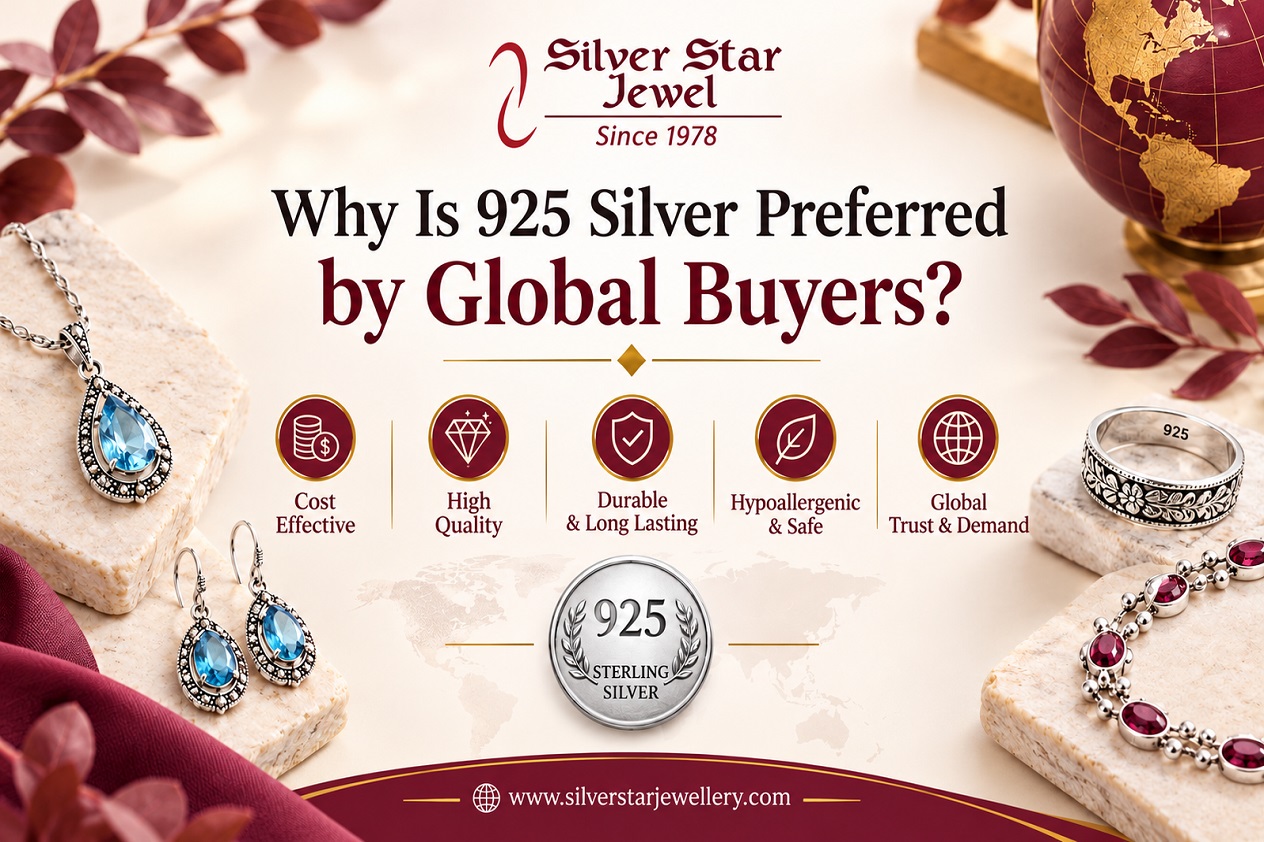
Global preference for 925 silver arises from a practical combination of material properties, standardised quality controls, economic accessibility, and established market familiarity. The alloy delivers sufficient strength for daily jewellery use while maintaining a high proportion of pure silver. Its compatibility with gemstones, suitability for varied production methods, and recognition through hallmarking systems support efficient trade across borders. When buyers select pieces made to this standard, they obtain items that balance appearance, durability, and relative cost in a manner validated by both materials science and long-standing commercial practice. Continued adherence to composition standards and transparent quality assurance will sustain this preference in international markets.
Frequently Asked Questions (FAQs)
Que. What does the 925 mark indicate on silver jewellery?
Ans. The 925 mark confirms that the alloy contains 92.5 percent pure silver, with the remaining 7.5 percent typically consisting of copper or other strengthening metals. This composition meets widely accepted international standards for sterling silver.
Que. Why is pure silver less common in everyday jewellery?
Ans. Pure silver is relatively soft and can bend or scratch easily during regular wear. The 925 alloy increases hardness and durability while retaining most of the desirable appearance and working properties of silver.
Que. How does 925 silver perform with gemstone settings?
Ans. The alloy provides adequate strength for secure prongs and bezels while remaining workable for precise setting techniques. It shows good chemical compatibility with most gemstones under normal conditions.
Que. Does 925 silver require special care compared with other metals?
Ans. Basic care such as dry storage, occasional gentle cleaning, and avoidance of harsh chemicals is sufficient. Tarnish can develop over time but is usually removable with standard silver cleaning methods.
Que. Why do bulk buyers favour this alloy for international trade?
Ans. Standardised purity, predictable material costs, and broad market recognition reduce verification risks and support consistent quality expectations across different suppliers and regions.