Silver and gemstones go back centuries, honestly, and it’s easy to see why the pairing never really went out of style. There’s something about silver’s tone, cool, a bit muted, that doesn’t try to outshine whatever stone sits on top of it. Gold can sometimes drown out a lighter colored stone. Silver just steps back. So if you’ve ever picked up a ring or a pendant in a store and wondered why that particular stone ended up there, there’s usually a reason, sometimes practical, sometimes just about how the colors sit together. Below is a rundown of the stones you’ll see most in silver pieces and roughly why.
Popular Gemstones Paired with Silver
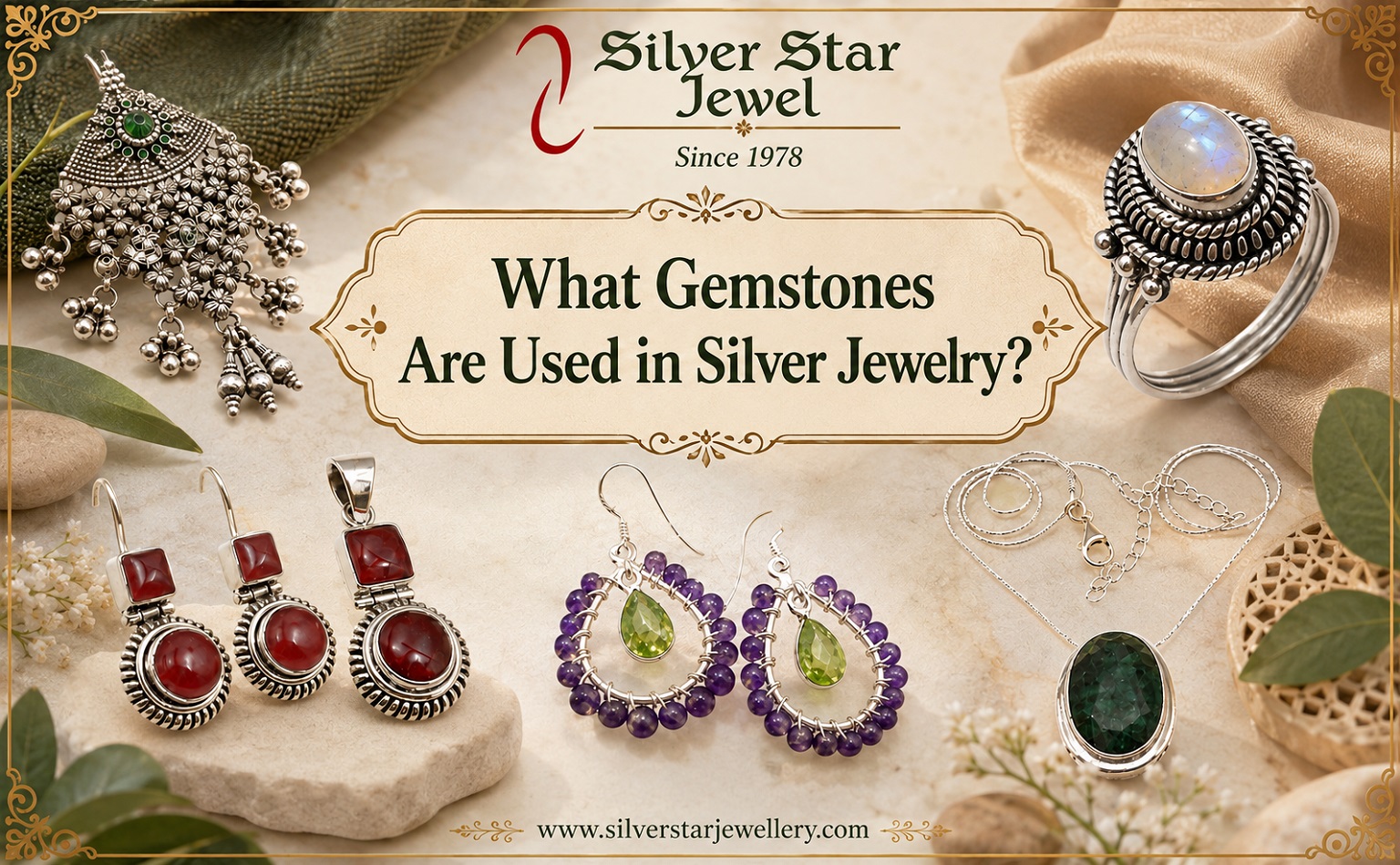
Not every stone works with every metal, and silver’s a bit picky in its own way. It’s bright, leans cool, and it’s cheap enough next to gold that jewelers can go bigger with stone sizes without the price shooting up. Amethyst turns up constantly. Turquoise too, along with garnet, citrine, peridot, and moonstone. None of these are picked at random. Most hold up fine to everyday wear, and their colors tend to sit well against silver instead of looking flat or fighting with the metal.
Amethyst and Its Place in Silver Settings
Amethyst is purple quartz, more or less, and the reason it pairs so well with silver comes down to something pretty simple: violet and silvery-white aren’t far apart on a color wheel, so the combination feels settled rather than loud. There’s a durability angle too. Amethyst sits around 7 on the Mohs scale, which is tough enough for a ring you’re wearing most days, tossing in a bag, knocking against a desk, whatever. Between the color logic and the fact that it can take a hit, it’s not surprising this one shows up so often.
Turquoise in Traditional Silver Designs
Turquoise’s relationship with silver isn’t new. You see it constantly in Southwestern American jewelry, and it’s all over South Asian pieces as well. The blue-green, opaque look of turquoise stands out hard against polished silver, and that contrast is really the whole appeal. One thing worth noting: turquoise almost always gets set in a bezel rather than held by prongs. Partly that’s style, but mostly it’s because turquoise is softer than a lot of other stones, and a bezel just protects the surface better.
Garnet and Citrine for Warmer Tones
Silver jewelry doesn’t have to stay in the cool-tone lane. Garnet’s deep red and citrine’s golden yellow bring warmth into the mix without anyone reaching for gold instead. And unlike turquoise, both of these are transparent, so light gets through and you actually get sparkle rather than flat, opaque color. Garnet in particular takes a beating well. It resists scratches and knocks better than you’d guess from how soft that red looks.
Wholesale Silver Gemstone Jewelry Supplier and What They Actually Do
Before any of this ends up on a shelf somewhere, someone has to source the stones, cut them, set them, finish the piece, and that job usually falls to a Wholesale Silver Gemstone Jewelry Supplier. This kind of supplier handles the raw material end of things and hands off finished, ready-to-sell pieces so a retailer doesn’t have to deal with any of that legwork. It matters more than people assume, because gemstone quality is all over the place depending on where it’s sourced, and a decent supplier keeps that consistent across an entire catalog, plain studs and detailed statement pieces alike. It’s usually cheaper too, working directly with a supplier instead of buying finished stock through two or three middlemen, which is a big part of why smaller sellers build their inventory this way.
Sterling Pendants as a Common Product Category
Out of every stone-and-silver combination out there, pendants get requested the most, probably. Wholesale Sterling Pendants do well because one stone gets to be the entire focus, just hanging there on a chain without competing against other design elements, which happens a lot with rings or bracelets. Pendants also come in a wide size range, so buyers can go small and subtle or big and bold depending on what they’re actually after.
Ankle Bracelets and Everyday Silver Pieces
Anklets have crept up as a steady category too, especially once warmer weather hits and they’re actually visible. A lot of Sterling Silver Ankle Bracelets Wholesale options work small gemstone accents into the chain itself, tiny turquoise beads or garnet chips, that sort of thing. These stay lightweight on purpose. An anklet sits right against skin and has to move with the foot all day, so it can’t carry the weight a cuff or a chunky ring might.
Choosing the Right Gemstone for a Silver Piece
There isn’t really one correct answer here. It comes down to three things mostly: skin tone, what the piece is for, and how much wear it’s going to take. Cooler stones like amethyst or moonstone usually suit cooler or fairer skin tones better, while garnet and citrine tend to look better on warmer tones. And for anything that’s going to get worn constantly, a daily ring or bracelet say, harder stones are just the safer call over something like turquoise or opal, which need more looking after.
Conclusion
This pairing has stuck around for centuries, and it’s not purely tradition keeping it alive. Silver lets a stone’s actual color show through instead of competing with it, it’s priced in a way that makes bigger stones affordable, and it holds up to daily wear better than most alternatives. Whatever someone ends up choosing, amethyst, turquoise, garnet, or something else entirely, the combination has lasted this long because it genuinely works, in how it looks and in how long it holds together.
Frequently Asked Questions (FAQs)
Que. Which gemstones show up most in silver jewelry?
Ans. Amethyst, turquoise, garnet, citrine, peridot, and moonstone are the regulars, mostly because their color and hardness work well with silver.
Que. Why does turquoise get paired with silver more often than gold?
Ans. There’s history behind it across a few different jewelry traditions, and turquoise’s blue-green tone just reads sharper against silver than it does against gold.
Que. Can gemstone silver jewelry take daily wear?
Ans. Depends on the stone honestly. Garnet and amethyst hold up fine day to day, but softer stones like turquoise or opal need a bit more caution and shouldn’t be worn carelessly.
Que. What’s the right way to clean and store this kind of jewelry?
Ans. Mild soap, water, and a soft cloth usually cover it, and pieces should be stored apart from each other so harder stones don’t scratch softer metal surfaces sitting nearby.
Que. Does skin tone actually matter when picking a gemstone?
Ans. To some degree, yes. Cooler stones like amethyst tend to suit fairer or cooler undertones, while warmer stones like citrine or garnet often look better on deeper or warmer tones, though it’s more of a loose guideline than a hard rule.