Buying silver jewelry in bulk means you have to evaluate things pretty carefully. People who source it for retail, design houses, or additional manufacturing need dependable quality, correct material composition, and a steady supply that does not wobble week to week. 925 silver, also referred to as sterling silver, is made up of 92.5 percent pure silver and 7.5 percent alloy, commonly copper. This level helps with durability while keeping the metal’s attractive look. If you understand what to check before placing a larger order, you can cut down on risk and make more informed decisions.
A few practical and technical points affect whether wholesale stock will actually work for your purposes. Looking at material integrity, construction details, supplier habits, and the included paperwork gives you a sensible way to move forward.
Material Composition and Hallmark Verification
The first inspection point is about the metal itself. Real 925 silver usually has a plain hallmark or stamp, showing “925,” “Sterling,” or a comparable approved mark, you know. In a lot of markets, you may also see a maker’s sign or assay office symbol there, right next to the purity clue. If there is no readable stamp, then it naturally makes authenticity feel questionable.
Many buyers also ask for a material certificate or a third-party test report, especially when we are talking about bigger quantities. Usual checking techniques are acid testing, X-ray fluorescence analysis, and sometimes fire assay for the more expensive batches. It also matters that the alloy composition stays consistent across the whole order, because changes can shift color, alter hardness, and influence long-term wear. Wholesale 925 Silver Jewelry that truly matches the declared standard helps limit later trouble, like customer returns or regulatory noncompliance.
Craftsmanship and Structural Quality
Besides the metal purity itself, construction quality ends up deciding how the pieces actually behave during use. Seams, junctions, and the soldering points should look clean and firmly set, not a little loose or messy here or there. Surfaces also need a steady finishing level without rough edges, deep scoring, or polishing that looks uneven. If the item has moving components like a clasp or an adjustable section, then the action should feel smooth, and the closure needs to hold securely.
Another helpful sign is weight consistency across similar pieces in the same batch. If there is a noticeable swing in weight, it can hint at irregular production steps or uneven finishing methods. Staying attentive to these aspects supports both the visual appeal and practical endurance once the jewelry reaches end customers.
Specific Considerations for Pendants and Bracelets
Different jewelry categories come with distinct structural requirements, and it can be a little tedious at first. For pendants, secure bail attachments matter a lot, plus a balanced overall design so the piece hangs correctly, not twisted or uneven. The metal thickness plays a role too, and the durability of any chain or cord connection influences how long everything keeps going. When people look at 925 Silver Pendants Wholesale, they usually confirm the integrity of the loop or bail, check the surface finishing on both the front side and the reverse, and review the overall proportion as well.
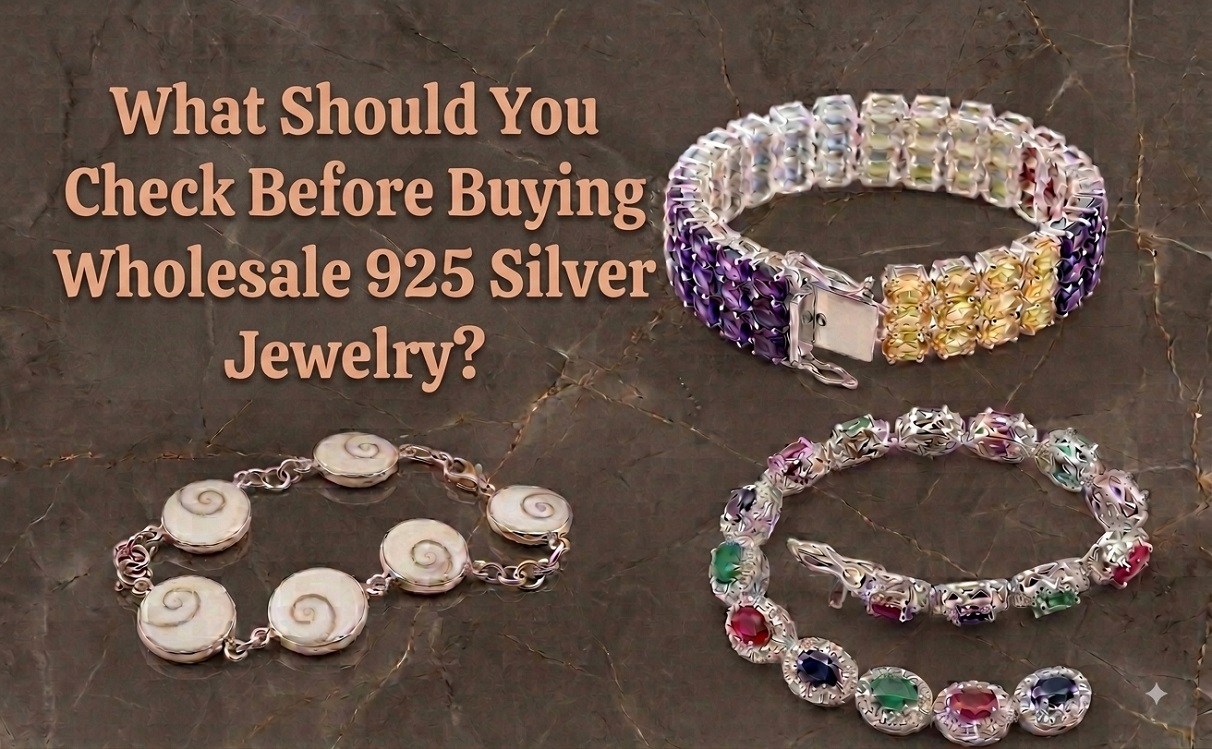
Bracelets bring extra mechanical demands. Clasps should open and close reliably without forcing it, and also without feeling loose. The links or solid sections need consistent spacing, and they should resist deformation during normal wear. For 925 Sterling Silver Bracelets Wholesale, inspection often turns to clasp security, the flexibility of the band or chain, and the ability to resist kinking or breakage at stress points. These functional considerations can affect customer satisfaction more directly than surface appearance alone.
Supplier Reliability and Documentation
The jewelry source influences the longer-term results. Generally, established suppliers give clear product specs, minimum order quantities, lead times and policies for return or replacement. When communication stays open about production ability and the quality control steps, buyers can judge risk better.
The paperwork should list metal content details, any surface finishes like rhodium plating, and the country of origin where it matters. Uniform packaging and labeling across shipments also help with smoother inventory control. Buyers who keep records on how suppliers perform through several orders end up with a more reliable picture.
Pricing, Market Awareness, and Order Structure
Price by itself does not really decide value. Very low offers, relative to the current silver market rates and usual manufacturing costs, can suggest compromised metal content or less careful workmanship. Buyers benefit from keeping an estimate of metal pricing in mind and also knowing common markups for different production approaches, like casting as opposed to hand fabrication.
The order setup also needs attention, because otherwise decisions get messy. You want clarity around minimum quantities, mixed design allowances, and the available customization options. That impacts planning and timing too. Some vendors will accept sample orders ahead of bigger commitments, which enables a hands-on inspection of quality. Getting the commercial terms straight early helps avoid confusion later on.
Surface Treatments and Long-Term Appearance
Many sterling silver pieces get extra surface treatments. Rhodium plating, for instance, makes tarnish resistance better and changes the tone a bit, toward white. People buying should check if plating is there, whether a thickness is mentioned, if any, and what durability is expected during ordinary use. If the silver is not plated, a natural patina forms over time; some places value that surface evolution while others want the brighter finish instead.
The supplier’s storage and care guidance, even small points, really helps keep the look steady during shipping and when it sits in warehousing. Paying attention to these details supports better stock care and clearer conversations with retail customers.
Ethical and Regulatory Considerations
Responsible sourcing practices are part of a broad assessment. Buyers may ask about where the material comes from and how it is produced, if that information is available. Following local import rules, any hallmarking demands, and consumer protection requirements tends to change from place to place, so it should be checked ahead of time
Intellectual property also needs attention. If designs closely mimic protected styles, that can create legal exposure. Having straightforward agreements about originality, or a granted licensed production arrangement, helps lower that risk
Practical Inspection Process
A more structured inspection approach really helps outcomes. The initial review of samples, or even a small trial order, lets you look at hallmark clarity, finishing quality, and how functional it performs. Then measurement of weight and dimensions against the given specifications gives objective data, not just opinions. By comparing several pieces inside one batch, you can see how consistent the results truly are, even if the lots vary a bit.
Also, photographic documentation along with written notes supports later reference. When bigger shipments come in, doing spot-checking of a representative sample helps confirm that the quality still matches the approved standard, without having to evaluate everything at once.
Conclusion
Getting sterling silver jewelry in quantity that actually works for you depends on checking purity, build quality, vendor reliability, and the money side in a steady way. You want clear hallmarks, steadier craftsmanship, and overall functional integrity across things like pendants and bracelets, because that becomes the technical base. Also, keeping documentation transparent, plus using pricing that makes sense, helps you make decisions that stay grounded.
When buyers look at Wholesale 925 Silver Jewelry with those points in mind, they usually avoid ending up with less-than-ideal stock. Focusing on the precise structural needs behind 925 Silver Pendants Wholesale and 925 Sterling Silver Bracelets Wholesale makes the evaluation smoother, but still careful. In the end, a methodical process rooted in material understanding and practical checking supports better inventory quality and more dependable business results.
Frequently Asked Questions (FAQs)
Que. What does the 925 mark indicate on silver jewelry?
Ans. It confirms that the metal contains 92.5 percent pure silver and 7.5 percent alloy, meeting the international standard for sterling silver.
Que. Why is consistency across a wholesale batch important?
Ans. Uniform weight, finishing, and construction quality reduce customer complaints and simplify inventory management and quality control processes.
Que. How can buyers verify metal purity beyond the hallmark?
Ans. Common methods include acid testing, X-ray fluorescence analysis, and, for higher-value lots, professional assay reports. Requesting documentation from the supplier is a standard first step.
Que. What structural features matter most for bracelets and pendants?
Ans. Secure clasps and flexible construction are critical for bracelets. Strong bail attachments and balanced design are essential for pendants. Both categories benefit from clean finishing and reliable joints.
Que. Should buyers always request samples before large orders?
Ans. Yes. Physical samples allow direct assessment of craftsmanship, finishing, and functional performance, providing clearer evidence than photographs or descriptions alone.