Silver jewelry has been around forever, and honestly, it’s still one of the safer bets in the market. Cheaper than gold, easier to work with, and most people can wear it daily without thinking twice about it. But here’s what most buyers don’t see: everything that happens before a piece lands in a display case or a customer’s cart. That’s the job of a Wholesale Silver Jewelry Manufacturer. Melting the raw metal, shaping it, polishing, testing, then packing it for shipment. If you’re buying in bulk, even a rough idea of how this works will save you trouble down the line.
Why Quality Checks Matter Once You Scale Up
One bad batch is never really “one” bad batch. If the alloy mix is slightly off, or someone rushes a stone setting, that mistake doesn’t stay contained. It shows up two hundred times over, not once. Manufacturers who’ve been doing this a while don’t wait until the end to catch problems. They check things along the way, at multiple points, because catching an issue on day one is a lot cheaper than catching it after five hundred units are already finished. Buyers usually notice the difference after their first couple of orders, sometimes sooner.
Sourcing and Testing the Raw Silver First
Nothing gets shaped or designed until the metal itself passes inspection. Good manufacturers buy from refiners they’ve worked with for years, then run purity checks, sometimes acid testing, sometimes an XRF machine when they want a more exact reading. Sterling silver needs to land at 92.5% pure, mixed with something like copper for strength. That’s where the 925 stamp comes from. Miss that ratio and you get faster tarnishing, weaker pieces, and occasionally skin reactions in people with sensitive skin. It’s not a glamorous step. But skip it and the problems don’t show up until the jewelry’s already sold.
Weight matters here too, more than people assume.
Getting Craftsmanship to Actually Match Across Units
Once the silver clears testing, it moves to the people actually shaping it, casting, stamping, hand-finishing depending on the piece. A manufacturer who knows what they’re doing picks the right method for the design instead of using one technique for everything. The hard part is consistency. Order five hundred of the same pendant and every one of them needs to weigh the same, polish the same, sit at the same size. That takes real molds and skilled hands, and it’s usually where cheaper suppliers start cutting corners without telling you.
What a Silver Pendant Manufacturer Actually Handles
Pendants are their own category, and they’re unforgiving. Fine engravings, gemstone settings, small symbolic shapes- any of these can go wrong in ways that are obvious the second you hold the piece. A Silver Pendant Manufacturer typically keeps a tighter watch on stone setting, edge smoothing, and where the clasp attaches, since those spots wear out first. If pendants are a big part of your order, working with someone who specializes in them beats working with a supplier spread across ten different product lines. That specialization shows up in the finished product, even if you can’t always point to exactly why.
Where Plating and Polishing Separate Good From Bad
Plating gets rushed more often than anything else in this process, and it’s usually where cheap silver falls apart first. Rhodium plating is the common choice; it adds shine and slows down tarnishing, which matters for pieces people wear daily. Thickness is measured in microns, and a thin layer looks fine in the box but starts fading within a few weeks of actual wear. Manufacturers who care keep that thickness within a set range instead of shaving it down to save a few cents per unit. Polishing needs just as much attention. A rushed buffing job leaves scratches you won’t notice under store lighting, but they show up fast once someone’s actually wearing the thing.
What Makes a Silver Bracelets Manufacturer Different
Bracelets take a beating that pendants and earrings just don’t. Constant movement on the wrist, sweat, the occasional bump against a desk or a car door. A Silver Bracelets Manufacturer has to think about clasp strength, how the links hold up over time, and whether the chain flexes without weakening. Reinforced clasps, joints that have actually been stress-tested, alloy hard enough to keep its shape but not so brittle it snaps in six months. It’s a different checklist than what works for something that just sits still, and that difference is why bracelet specialists tend to hold up better long-term.
Staying Compliant With Hallmarking Rules
This part isn’t exciting, but skipping it causes real problems. Most countries require a hallmark on silver above a certain purity, confirming exactly what’s in the metal. A manufacturer that takes this seriously follows the rules closely, because mislabeling silver content can mean fines and, worse, losing a retail partner’s trust for good. There’s also the nickel question in some regions, where too much nickel in the mix can trigger allergic reactions in wearers. Staying current on these rules protects the manufacturer’s business just as much as it protects the person who eventually buys the piece.
Testing Batches Before Anything Gets Shipped
Right before an order ships, most manufacturers pull random samples for one last check. Weight, stone security, and whether the plating actually bonded properly to the base metal underneath. Some go a step further and run tarnish tests, exposing samples to humidity or mild chemicals to fast-forward through months of wear in a matter of days. It catches things a glance would miss entirely, and that matters a lot when you’re shipping thousands of units and can’t reasonably check every single one by hand.
Why Packaging Isn’t an Afterthought
The work doesn’t stop once the jewelry’s finished. How it travels matters just as much. Anti-tarnish pouches, moisture-absorbing packets and packaging sturdy enough to survive a rough shipping route without denting or scratching what’s inside. Skip this part, and you can undo weeks of careful work in one bad shipment. It’s worth asking suppliers directly how they pack international orders, especially since those can sit in transit for weeks under conditions nobody’s really controlling.
Conclusion
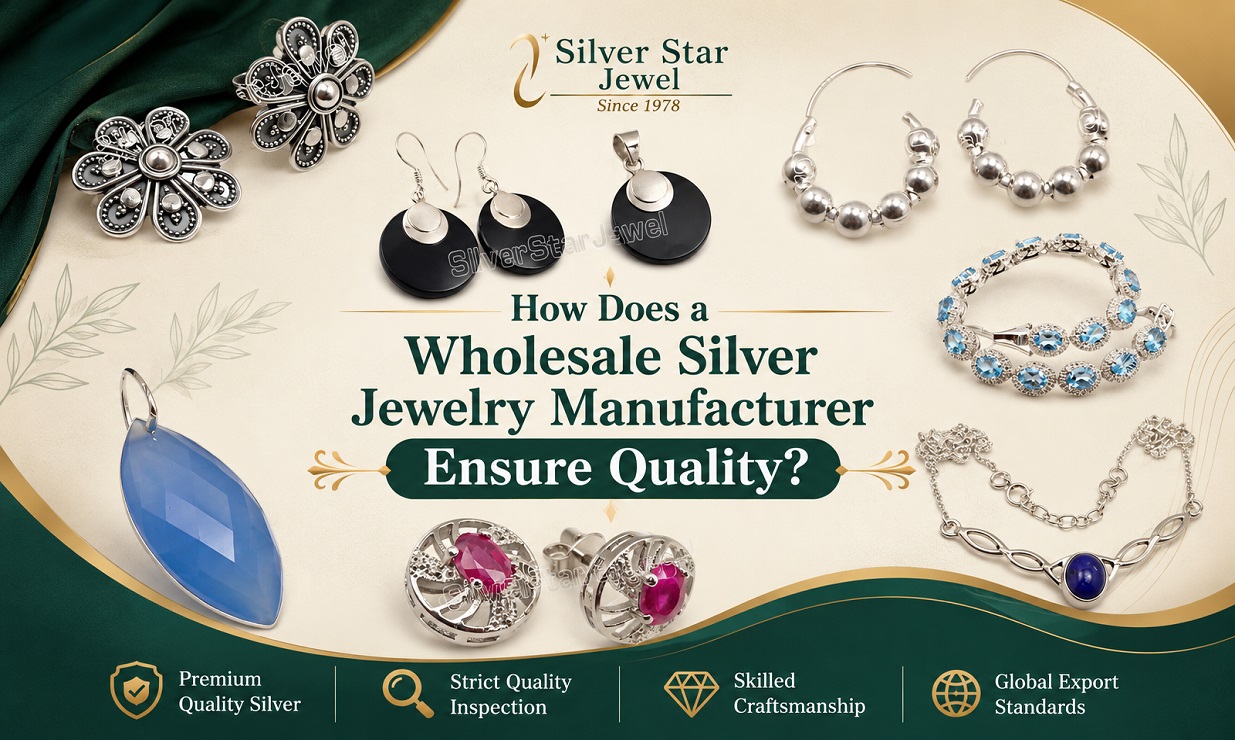
There isn’t one single step that guarantees quality in wholesale silver jewelry. It’s a long chain of decisions, starting with where the raw metal comes from and ending with how carefully the finished pieces get packed for shipping. A dependable Wholesale Silver Jewelry Manufacturer builds checks into every part of that chain: purity testing, careful craftsmanship, proper plating, hallmarking compliance, none of it treated as optional. Specialized producers, whether they focus on pendants or bracelets, tend to catch the specific problems each product type runs into. For anyone sourcing silver jewelry in bulk, understanding this whole process makes it a lot easier to find a supplier who actually delivers, order after order.
Frequently Asked Questions (FAQs)
Que. What does 925 sterling silver actually mean?
Ans. It means the piece is 92.5% pure silver, mixed with something like copper to make it strong enough for daily wear.
Que. How can buyers check silver purity before a bulk order?
Ans. Ask for test reports from acid testing or XRF analysis. It’s also reasonable to request a small sample batch and check it independently before committing to the full order.
Que. Why does plating thickness matter this much?
Ans. Thicker plating, measured in microns, resists tarnishing for a lot longer. Thin plating tends to fade or discolor within just a few weeks of regular wear.
Que. Is hallmarking required on all silver jewelry?
Ans. It depends on the country. Many regions legally require a hallmark on silver above a certain purity, mainly to confirm the actual metal content to buyers.
Que. What should buyers look for when comparing suppliers?
Ans. Look at their testing process, hallmarking compliance, and packaging standards, and ask for samples before placing a large order. These details usually predict how reliable a supplier will be over time.